Mapping Multiplier Paths: How British Casino Interfaces Guide Selections Through Layered Reward Mechanics and Secure Funding Routes
Amir Lange · Jun 2, 2026
Mapping Multiplier Paths: How British Casino Interfaces Guide Selections Through Layered Reward Mechanics and Secure Funding Routes
British casino interfaces organize player choices into visual sequences where selections lead through multiplier stages that connect directly to progressive reward layers, and these systems incorporate verified funding options that maintain transaction security at each step. Observers note that designers arrange on-screen elements to present paths as interconnected routes, allowing users to trace how initial bets expand into higher multiplier values before unlocking subsequent bonus tiers. Data from industry analyses shows that such layouts appear consistently across mobile and desktop platforms operating within the United Kingdom, where regulatory standards require clear presentation of mechanics and payment safeguards.
Interface Structures That Outline Multiplier Sequences
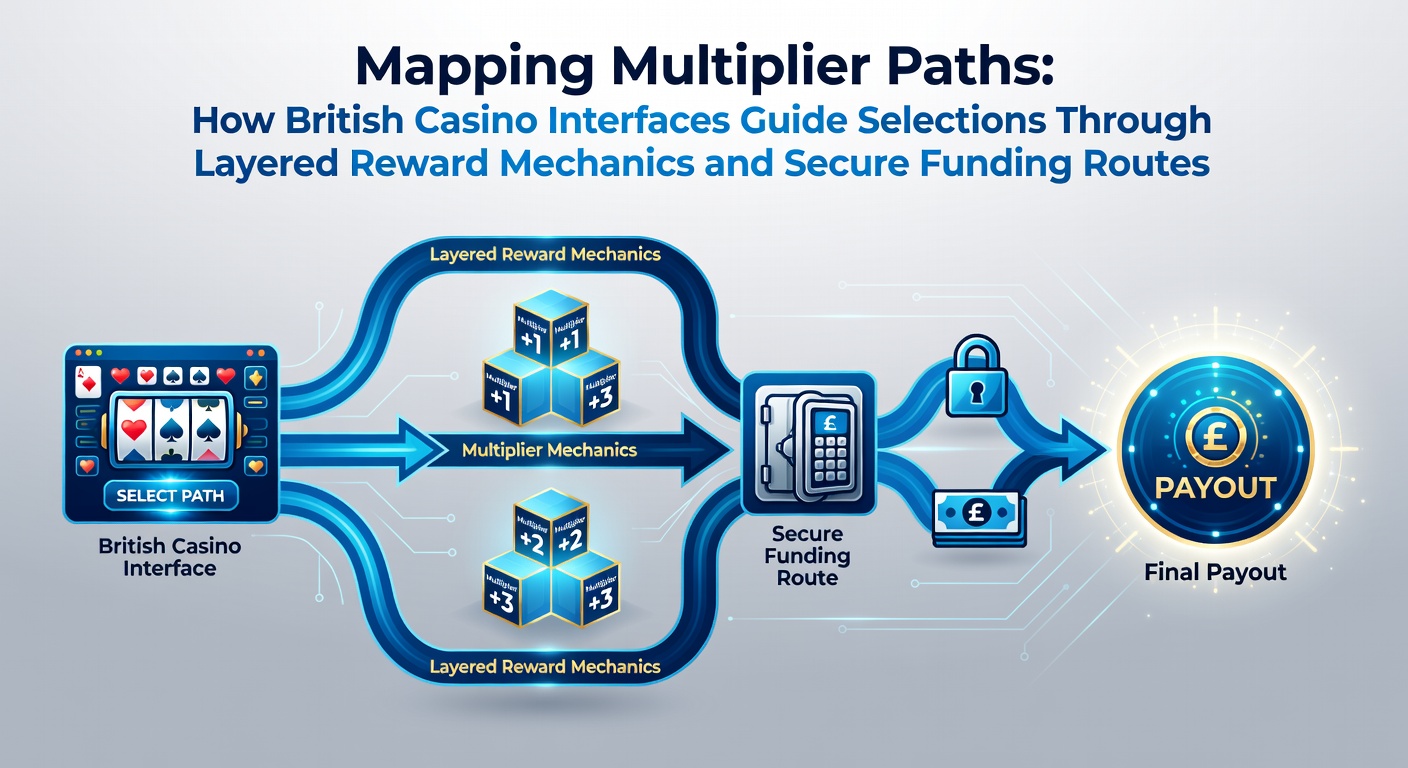
Design teams create dashboard views that display multiplier paths as branching diagrams, and players follow these lines to select combinations that accumulate values across multiple game rounds. Researchers have documented cases where color-coded segments highlight progression points, guiding attention toward stages that double or triple base rewards while maintaining visibility of remaining options. Studies conducted by academic groups indicate that these visual cues reduce selection errors because they align with how users scan information in sequence rather than as isolated buttons.
One documented pattern involves central hubs that expand outward into separate multiplier branches, each tied to specific game categories such as reel-based titles or table variants. Those who analyze user navigation logs report that participants tend to complete full paths when interfaces provide step indicators that update in real time, showing current multiplier status alongside projected reward totals. This approach appears in platforms that update layouts periodically, with modifications noted as early as June 2026 that refined path visibility for higher-resolution displays.
Layered Reward Mechanics Integrated Into Selection Flows
Reward layers stack vertically in many interfaces, where completion of one multiplier segment automatically reveals the next tier containing additional features like extended play periods or enhanced prize pools. Evidence from platform audits reveals that these layers connect through secure data channels that verify each advancement before displaying new choices, preventing premature access to higher stages. Figures released by European research networks show that such layered systems correlate with extended session durations when funding remains uninterrupted throughout the progression.

Observers document that reward mechanics often incorporate conditional triggers, such as consecutive wins along a mapped path that unlock cumulative multipliers across linked games. Australian Gambling Research Centre reports highlight similar integration methods used internationally, where interfaces track accumulated values through encrypted ledgers that update without exposing raw transaction details. This method keeps reward visibility separate from funding verification steps, allowing smooth transitions between layers while preserving compliance records.
Secure Funding Routes Embedded Within Reward Pathways
Payment modules sit alongside multiplier displays so that funding selections occur without leaving the active path view, and encryption protocols activate automatically when users choose deposit or withdrawal functions. Industry organizations such as the Interactive Gaming Council have published guidelines that emphasize embedding verification steps directly into these routes, reducing the number of separate screens required. Data indicates that platforms following these patterns experience fewer interruptions during reward layer advancements because funding confirmations process in parallel with multiplier calculations.
Case examples from British operators show interfaces that pre-populate funding preferences based on prior verified accounts, then route those selections through the same multiplier mapping system to maintain continuity. Researchers note that this integration supports real-time balance updates that reflect both incoming rewards and outgoing transaction statuses, all while meeting standards for data protection across different device types. As of June 2026, several platforms introduced additional biometric checks at funding junctions without altering the visible reward path structure.
Navigation Patterns Observed Across Platforms
Users frequently encounter progress bars that span multiple screens, each segment representing a distinct multiplier stage connected to a corresponding reward layer and a linked funding checkpoint. Those tracking user behavior find that these bars update through background processes that pull data from secure servers, ensuring accuracy without requiring manual refreshes. Reports from university-led studies on digital gambling interfaces confirm that such continuous feedback loops help maintain engagement by displaying clear next-step indicators tied to both rewards and account security.
Cross-platform consistency appears in how menus collapse or expand to reveal layered options only after prior selections register successfully, and this sequencing prevents access to incomplete paths. Observers have recorded instances where funding routes include multiple verified methods such as digital wallets and card processors, each presented with security badges that align visually with the multiplier path colors. This alignment creates a unified visual language that links reward progression directly to transaction safety measures.
Conclusion
British casino interfaces continue to refine how multiplier paths connect layered rewards with secure funding routes, relying on visual mapping and parallel verification processes that support user navigation through complex systems. Evidence gathered from multiple research sources demonstrates that these designs maintain clarity while meeting technical and regulatory requirements across evolving device formats. Data shows ongoing adjustments, including those observed around June 2026, that preserve the core structure of path guidance without introducing new friction points in either reward accumulation or funding security.